Abstract
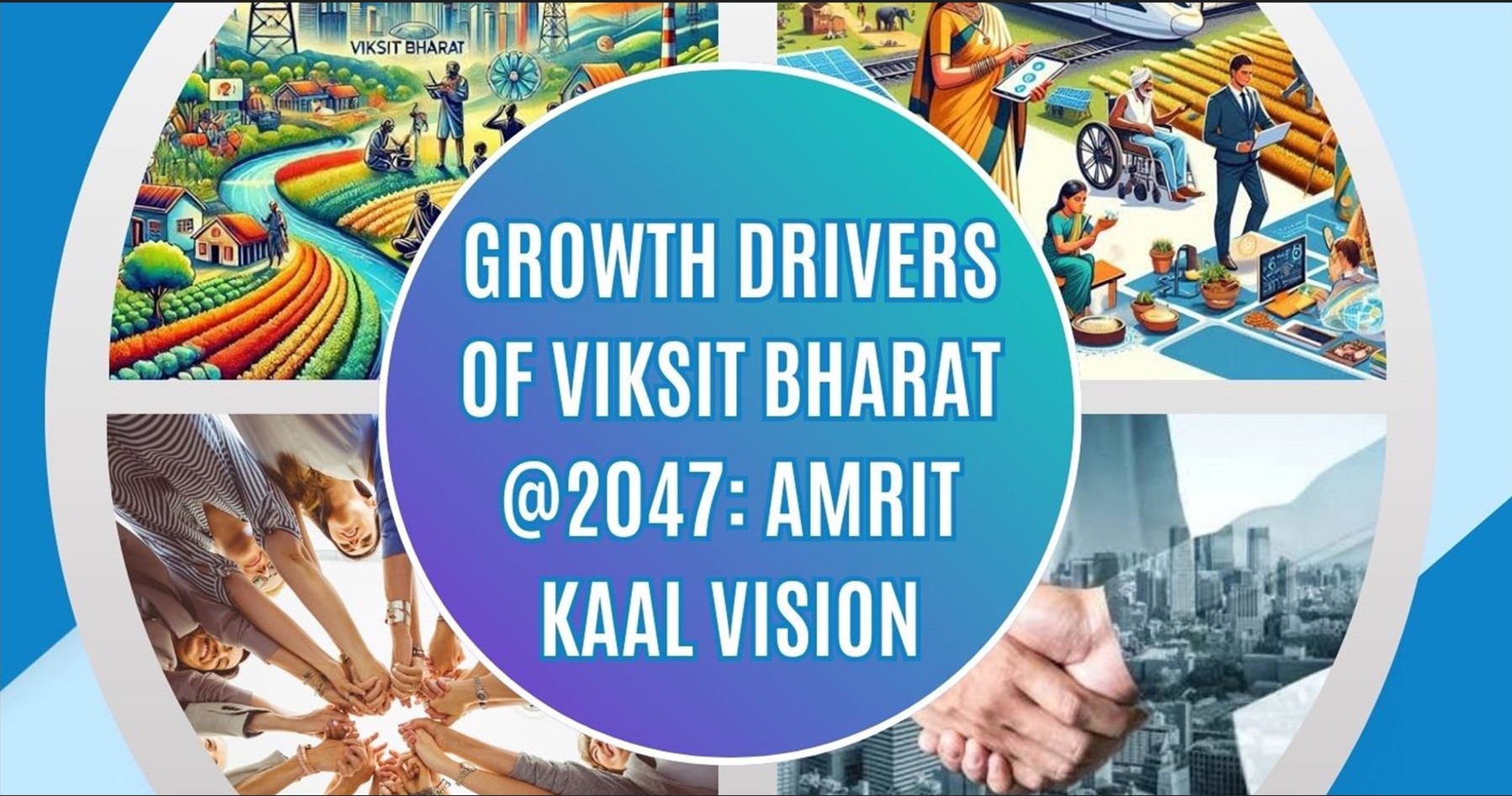
Viksit Bharat seeks to convert India into a developed country by 2047, focusing on economic prosperity, social welfare, and sustainable environmental practices. With India nearing its 100th anniversary of independence in 2047, the idea of "Viksit Bharat" (Developed India) is becoming more central to national conversation. The GYAN framework, which includes Garib, Yuva, Annadata, and Nari, forms the foundation for India's Viksit Bharat 2047 vision. Among these pillars, empowering women is a vital element in achieving this ambitious national objective. Despite advancements in India, deeply rooted structural obstacles and societal norms continue to sustain gender inequalities, especially in education levels and participation in the workforce. Tackling these obstacles necessitates focused strategic measures that highlight the importance of education, access to healthcare, financial autonomy, and policy changes aimed at attaining and maintaining gender equality. Women in India play a crucial role in fostering economic growth and development. The government seeks to promote sustainable development and empower women through various programs, such as Skill India, Startup India, SHGs, Lakpatti Didi, and others. By enhancing women's participation in the organised sector, establishing women-driven community organisation will not only ensure economic empowerment of women, but will also increase their work participation ratio and also the objective of the Government to achieve a 5 trillion economy.
Keywords: Viksit Bharat, women empowerment, policy intervention, sustainable growth, work force participation.
1. Introduction
In the intricate narrative of India's developmental trajectory, women have historically occupied the role of unacknowledged protagonists, diligently striving to elevate their families and communities. Nonetheless, their potential has frequently been impeded by entrenched societal conventions, economic inequities, and restricted access to essential resources. In recent years, there has been a notable proliferation of women-led community organizations, which have emerged as formidable agents of social transformation and economic empowerment. These organizations, spearheaded by visionary female leaders, are not only contesting conventional gender roles but are also instrumental in shaping the future landscape of India.
India's history is at a turning point. India will own the upcoming century as the country confidently embraces its potential. Currently the fifth largest economy in the world, it is expected to rise to the third position by 2027 when its GDP reaches US$5 trillion (IMF estimates). India's GDP is expected to reach $30 trillion by 2047 and have all the features of a modern nation. India will be developed. Women's involvement in community-based organizations (CBOs) has made it possible for them to express their agency and voice in a variety of contexts, including improved decision-making authority in the home and community, access to and control over community resources, and reducing social and cultural norms (N, 2014).
One of the few democracies to guarantee complete gender equality in its constitution was India, but it hasn't been reflected in cultural norms and laws. India was among the initial democracies to incorporate full gender equality within its constitution; however, it has not succeeded in translating this principle into societal norms and regulations. We envision an India wherein women, working from rural areas, small towns, and urban residences, constitute more than half of India's high-skill labor force. We envision an India where the female labor force participation rate ranks within the highest global quartile and the wage disparity is situated within the lowest global quintile. An OECD (Organization for Economic Cooperation and Development) study (2015) indicates that achieving gender parity in labor force participation and wages could enhance India's GDP growth rate by 1.5% to 2.4%. The IMF posits that the equal integration of females into the economy has the potential to augment GDP by an average of 16% across various countries. The projection for India is considerably elevated, estimating an increase of 27% of GDP (Virmani, 2024).
2. Importance of Women-led Organisations
With a forward-thinking passion to empower women and promote change, India has been relentlessly working on initiatives such as ‘Beti Bachao, Beti Padhao’ and ‘Sukanya Samriddhi Yojana’ that have not only challenged prevailing attitudes but have also significantly enhanced the female literacy rate in the nation, which rose from 55. 1 percent in 2005-2006 to 68.4 percent in 2015-2016, jumping to 71.5 percent in 2019-2021. India has also achieved remarkable advancements in the area of women’s rights on a global scale. In September 2020, India was elected as a member of the esteemed UN Commission on the Status of Women, obtaining the second highest number of votes. India further appointed its first female President of the Council during its term as President of the UN Security Council in December 2022 (Khullar, 2023)
Women- and girl-led organizations (WGLOs) frequently serve as the initial responders to the needs of their communities. They offer vital services to women, girls, and other marginalized groups, enhance awareness regarding threats to the rights of women and girls, and call for accountability. However, in spite of numerous international commitments that recognize the significance of collaborating with WGLOs, along with an expanding collection of effective practices on how to engage with them, WGLOs continue to be largely underfunded and neglected. Women-led Organisation plays a very important role in the economic upliftment of society.
‘GYAN’ i.e Garib, Yuva, Annadata, Nari are the four pillars of Viksit Bharat 2047. Empowering one of the four is crucial for Viksit Bharat's vision by 2047, but India faces entrenched challenges. In keeping with the golden age, or "Amrit Kaal," as Prime Minister Shri Narendra Modi has envisioned. With numerous changes in nearly every sector, it is predicted that the nation will undergo a significant transformation, and India's trajectory will shift from "developing" to "developed." One of the nation's primary goals is to become a $30 trillion economy. The goal of Viksit Bharat is to establish an inclusive economy in which all citizens may take part and profit (Bhatia, Singhal, & Arora, 2024). For the success of the vision, the community development plan should be the main focus.
3. Community Driven Development
Community Driven Development (CDD) represents a methodological framework that prioritizes the autonomy of local communities in the orchestration of planning initiatives and allocation of resources. The underlying principle posits that each community possesses an inherent right to actively participate in its developmental trajectory through meaningful decision-making engagement. Enhanced participation by the community frequently results in a more judicious application of resources and outcomes that are more congruent with their specific needs (Wong, 2012). Notwithstanding the increasing prevalence of CDD initiatives, there exists a paucity of empirical evidence regarding their efficacy in fundamentally and sustainably bolstering local institutions and enhancing social capital.
Experience has demonstrated that when provided with clear and transparent rules, access to information, and suitable technical and financial assistance, communities can effectively mobilize to identify local priorities and tackle development challenges by collaborating with local governments and other entities to develop small-scale infrastructure, provide essential services, and improve livelihoods. The World Bank acknowledges that CLD methods and initiatives are crucial components of a successful strategy for poverty alleviation and sustainable development (Ivers, 2023).
Figure 1: Principles of Community Development
4. Women Working in the Unorganised Sector
Women play a crucial role in driving the economic growth of a country, but their work is often unpaid and undervalued. In recent years, more women have entered the labor force, yet their representation is still lower compared to men. Jhabubala Lenana's study on informal workers and the economy highlights the increasing visibility and power of informal workers, but the dominant economy fails to address their needs. According to the 2011 census, there are 149. 8 million women workers in India, with most engaged in agriculture and domestic work. The female labor force participation rate was 25.51% in 2011, slightly lower than in 2001. The employment review by DGE&T (Director General of Economic and Training) shows that a significant number of women work in the public, social, and personal services sector. UN data reveals that a high percentage of domestic workers and migrants are women, as well as those employed in service industries.
To achieve a developed India, it is crucial to empower women by providing them with training and better opportunities in their respective fields. Empowerment can take place in various areas such as education, health, and skills development. It is essential to recognize and support the valuable contributions of women to the economy and society as a whole. Women-led community organizations focus on empowering women economically by providing tools, resources, and training for entrepreneurship, benefiting them and their families and thereby increasing their local economy. Women-led community organizations address various social issues, promoting gender equality, healthcare, and education to create a fairer society (Mondal, 2024).
5. Community-led Organisations in Maharashtra
In Maharashtra, we have around 1,90,000 SHGs with MAVIM (Mahila Arthik Vikas Mandal), and more than 2 Lakh SHGs in Umeed. More than 25000 SHGs in the National Urban Livelihood Mission. They are all working in silos. Regular Saving, Linkages, Marketing, and Faith in each other are some of the strengths of SHGs. Because of a lack of market, their business is hampered. To come up with it, the Women and Child Development Department came up with Mukhya Mantri Mahila Shashatikaran Abhiyan. Mahila Shakti Kendra (MSK) Scheme, under the Ministry of Women and Child Development, was approved in November 2017 as a centrally sponsored scheme to empower rural women through community participation.
Bangladesh is home to more than 4 million garment workers, who represent the foundation of the nation's textile industry. As the emphasis on post-industrial fabric recycling increases, local communities are engaging in this transformation by contributing to the recycling ecosystem. Women, in particular, constitute a significant portion of the workforce within textile factories, and numerous individuals are now directly participating in recycling initiatives. In Dhaka and other industrial centres, community-based organizations and local NGOs are collaborating with factories to assist in the collection, sorting, and processing of fabric waste. These initiatives provide employment opportunities for local communities and cultivate a sense of responsibility towards the environment. Workers who previously engaged in traditional textile production are now receiving retraining to handle recycled materials, thereby enhancing their skills and income potential.
In India, Maharashtra Mukhyamantri Mahila Sashaktikaran Abhiyan was designed and implemented by the Women and Child Development Department of Maharashtra. The main focus of the scheme in the state was to promote women-driven community organisation. With the initiatives, approx. 450 Community Organisations were created, the Garment cluster and Aggarbatti cluster in Nagpur are the most populous among them. Women’s got regenerated with this money. The Department has also introduced the “PINK RIKSHAW” Scheme, in which the department is going to provide 10000 rickshaws in 8 urban districts. In which 10% is self, 20 % is government subsidy, and 70% loan is available for women. Such small enterprises and benefits given to women have created and brought changes in their lives. Their perspectives towards life have changed and shifted for the betterment of society, and now they are booming.
The department has also introduced “YASHAWINI,” an online platform similar to Amazon and Flipkart, for the NGO’s and SHGs’ women for selling their products online. The department is also implementing 1% of its funds for the achievements of the Lakhpati Didi. Self-Employed Women's Association (SEWA), Snehalaya, Swayam Shikshan Prayog (SSP), Mann Deshi Foundation, CORO India are some of the other community organisations in Maharashtra working for social and economic development, and bringing changes in the lives of women.
6. Conclusion
A multifaceted approach to the Maharashtra government, which supports public organizations managed by the unorganized sector, is an innovative, comprehensive development model. These initiatives, which are the management of economic, social, and institutional disabilities, not only improved women's economic conditions but also contributed to wider social transformation. A strategic combination of financial inclusion, skill development, social protection, and technological empowerment is creating a powerful ecosystem in which women can become active economic agents and community leaders. Sustained engagement, adaptive strategies, and continuous innovation are essential to strengthen women's economic empowerment in the unorganized sector in Maharashtra. This comprehensive overview highlights the key steps taken by the Maharashtra government, demonstrating a holistic and progressive approach to supporting women workers across sectors and contexts. If we support CLO (Community Led Organisation), we can increase their economic capital. Maharashtra's experience of CLO will set an example of the successful mode of community mobilization and economic prosperity of women that fulfils the vision of Viksit Bharat.
References
1. Bhatia, A. K., Singhal, G., & Arora, S. (2024). Towards an Empowered India: Women’s Role in Achieving the Viksit Bharat 2047 Vision. (pp. 1-8). New Delhi: Bharati Vidyapeeth's Institute of Computer Applications and Management (BVICAM).Retrieved from
https://bvicam.in/INDIACom/news/ViksitBharat2024Proceedings/papers/188.pdf Ivers, L. (2023). Community and Local Development. Washington, D.C.: World Bank Group.
2. Kaur, Avanit, Bhatiya; Gazal, Singhal; Arora, Shewta. (2024). Towards an Empowered India: Women's Role in Achieving the Viksit Bharat 2047 Vision. Proceedings of the 2nd ICSSR Conference on “India Towards Viksit Bharat @2047” Bharati Vidyapeeth's Institute of Computer Applications and Management (BVICAM), New Delhi (INDIA), Viksit Bharat Conference 2024; 978 93- 80544-61-8, 1-8.
3. Khullar, A. (2023). Women-Led Development: India's Role in Advancing Gender Equality. New Delhi: Invest India. Retrieved from
https://www.investindia.gov.in/team-india-blogs/women-led- development-India’s-role-advancing-gender-equality
4. Mondal, S. (2024, March). Empowerment of Women from the Experiences of the Indian State: A Reflection from NFHS-5. Geo Journal, 1-20.
5. N, A. (2014). Women's Participation and Voice in Community-Based Organisations. Philippines: Asian Development Bank. Retrieved from https://www.adb.org/sites/default/files/publication/42632/adb-experiences-womens- participation-voice.pdf
6. Sharma, D. (2019, March). A Study on Socio-Economic Pattern of Organised and Unorganised Workforce in Vidarbha Region. International Journal of Research in Engineering, IT and Social Sciences, 9, 67-72. Retrieved from http://indusedu.org/
7. Virmani, A. (2024). Viksit Bharat: Unshackling Job Creators and Empowering Growth Drivers. NITI, 8-15. Retrieved from
https://www.niti.gov.in/sites/default/files/2024- 07/WP_Viksit_Bharat_2024-July-19.pdf
